
Harvest 2026: Lessons from the UK’s Hottest Summer on Record
Harvest 2026 is in the shed.
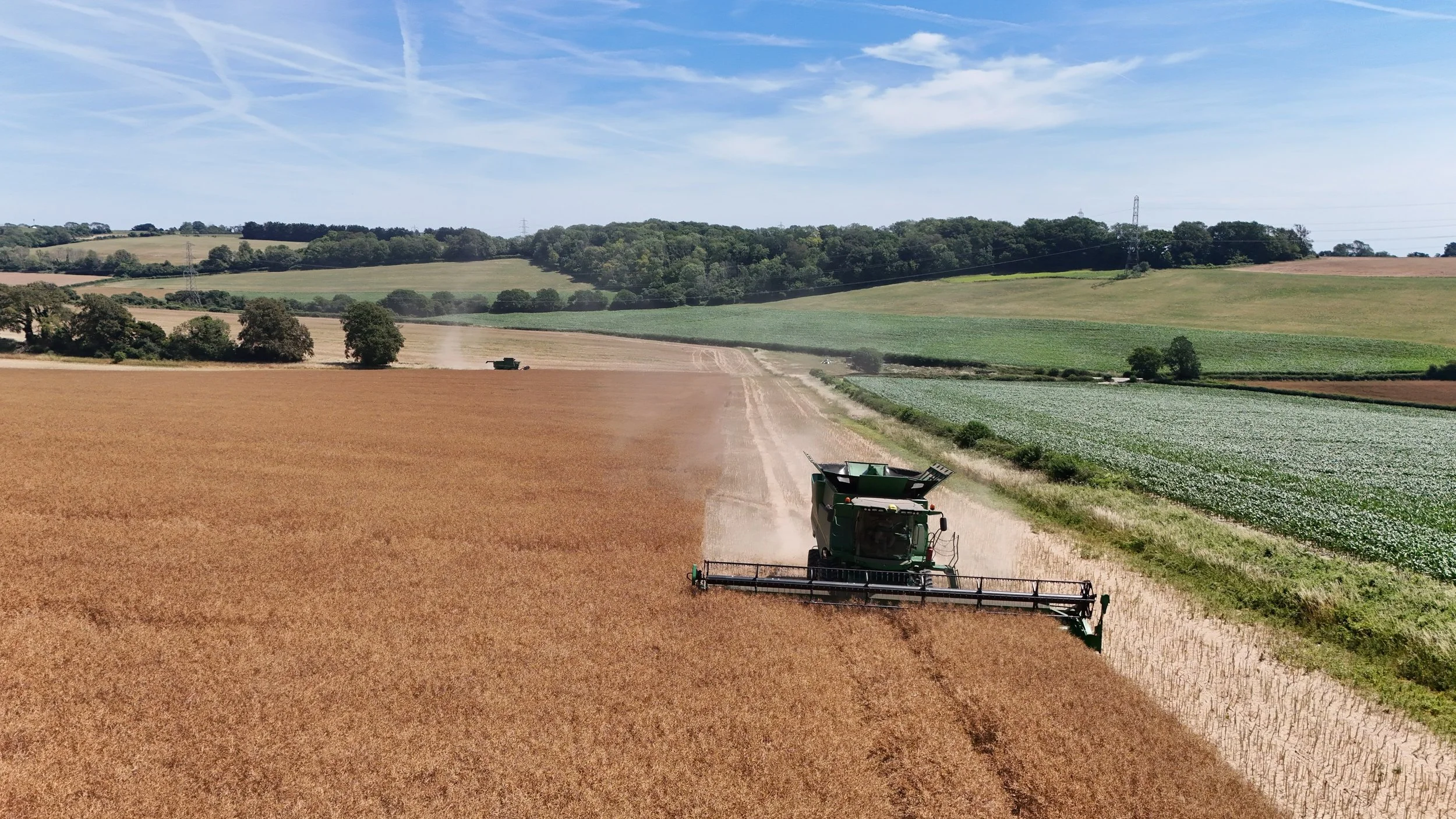
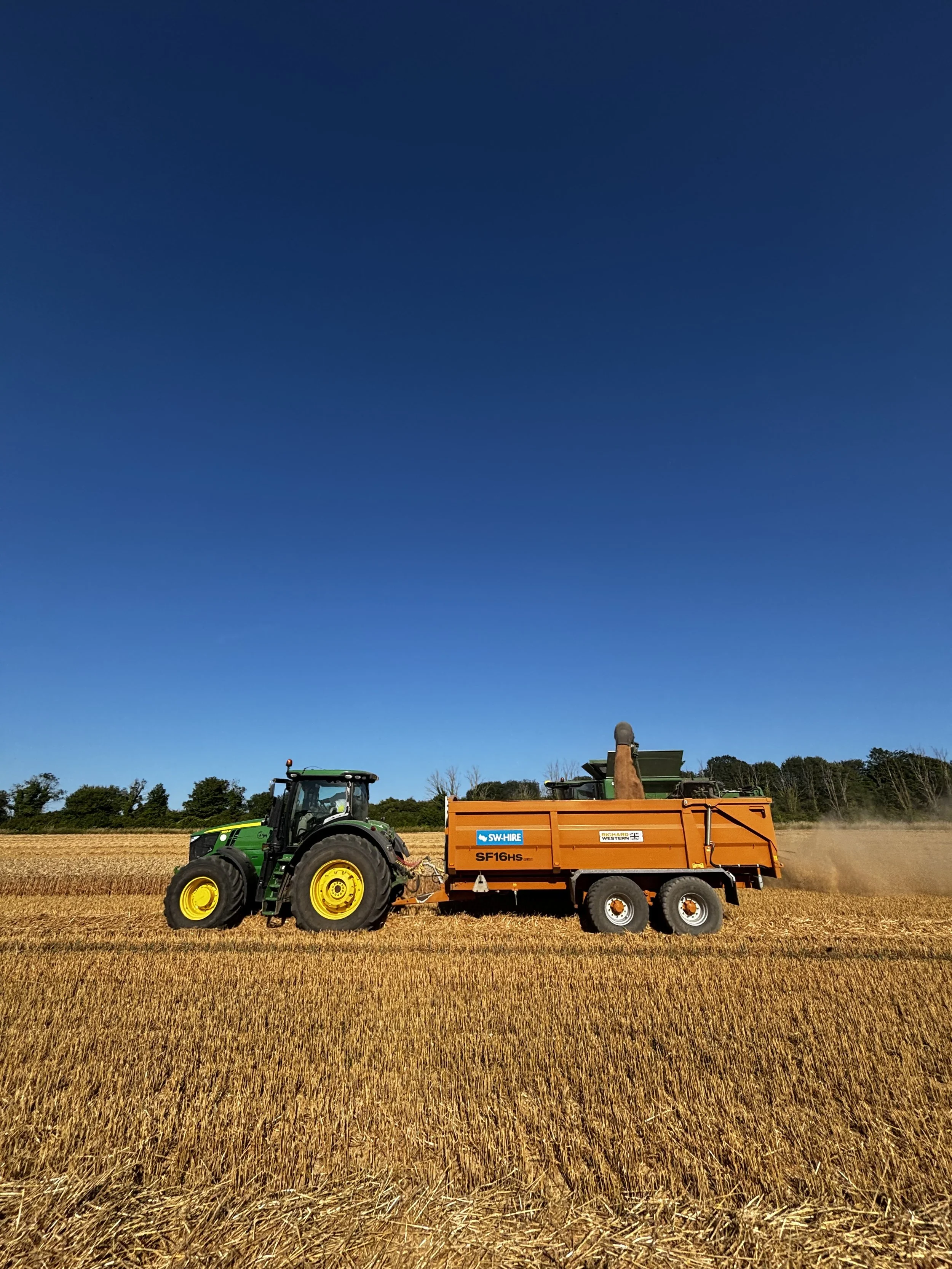
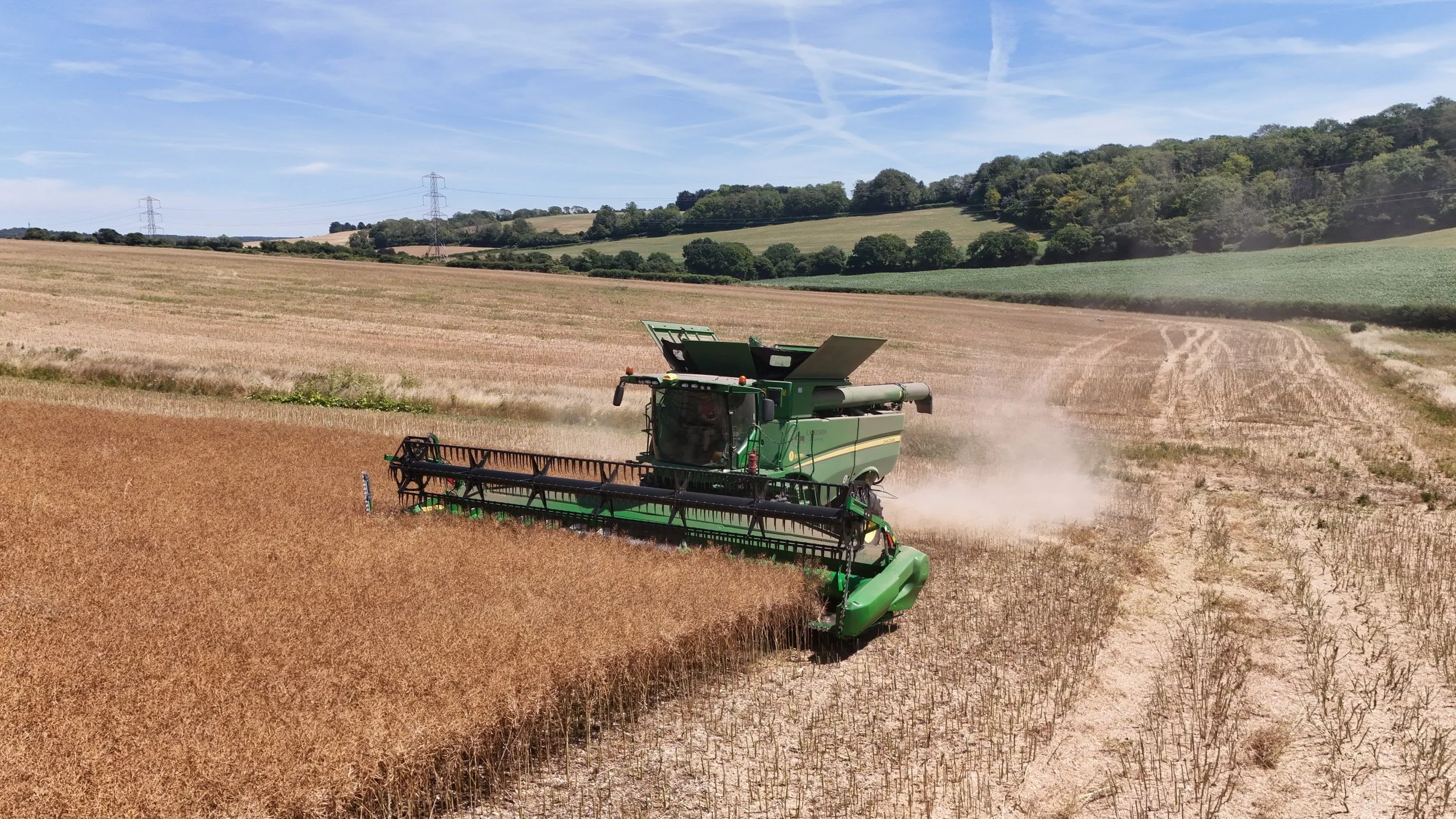
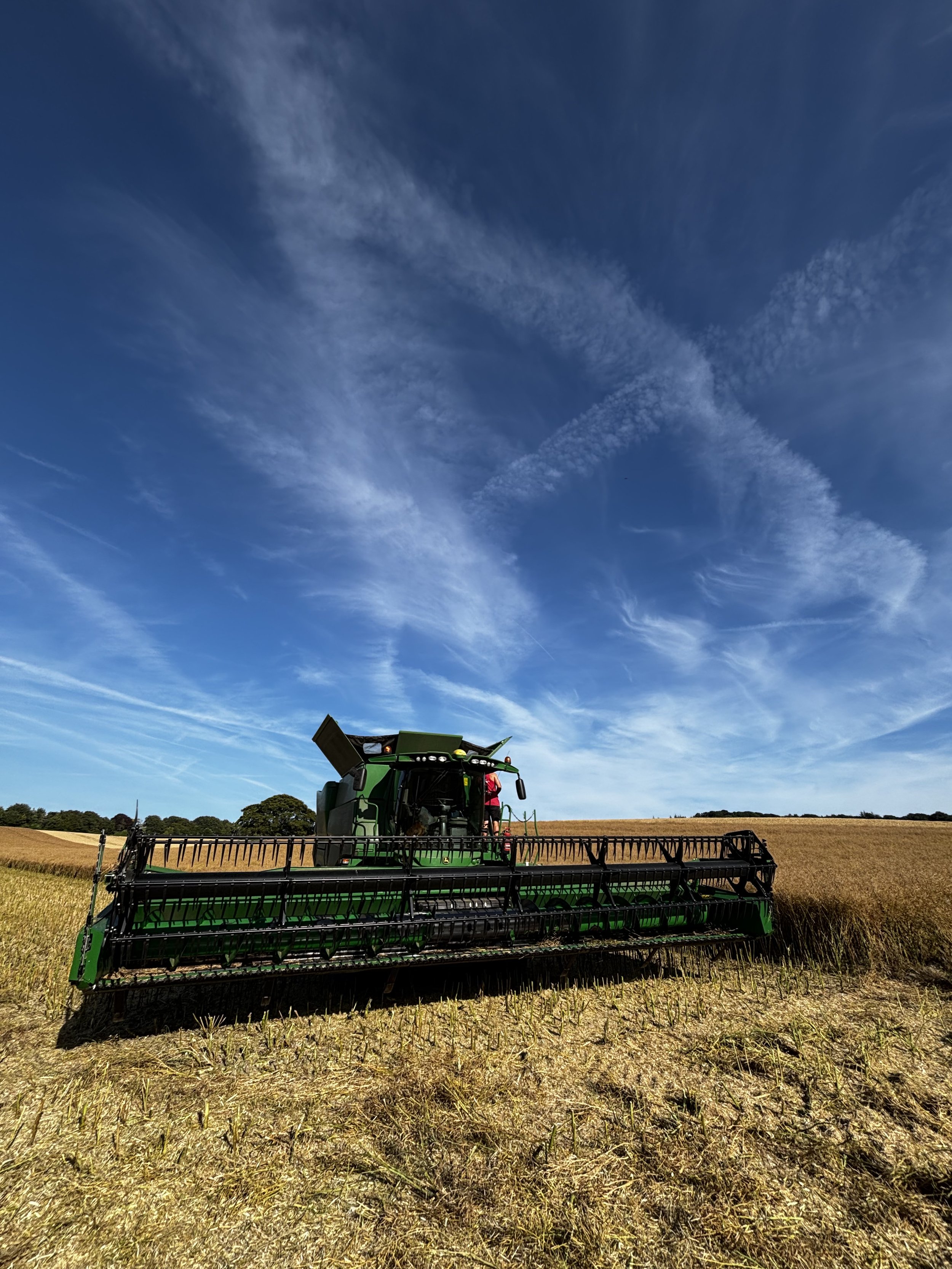
It was an early, quick harvest. We started the harvest of the oilseed rape on 7th July, the bulk of the wheat was harvested between 8th and 22nd July, and the last of the linseed was cut on 14th August.
The winter crops were the backbone of 2026, with winter wheat averaging nearly 9t/ha. The spring crops struggled with heat and drought stress, with them drying out quicky rather than ripening. This led to reduced yields across all the spring crops with spring barley averaging at 6.2t/ha and spring oats at 4.9t/ha.
A drought harvest across the country
We weren't alone. Nationally, 2026 was a drought-and-heat harvest, and the Energy and Climate Intelligence Unit puts the cost to UK cereal growers at around £452m in lost yield.
The Met Office has provisionally named summer 2026 the UK's hottest on record, with a mean of 16.5°C, beating 2025 by 0.4°C. England had its driest July on record, and the heat peaked at 38.1°C in Kew on 13th August. It followed a drier-than-usual April and a dry start to May, so many crops never had the moisture to build a big canopy.
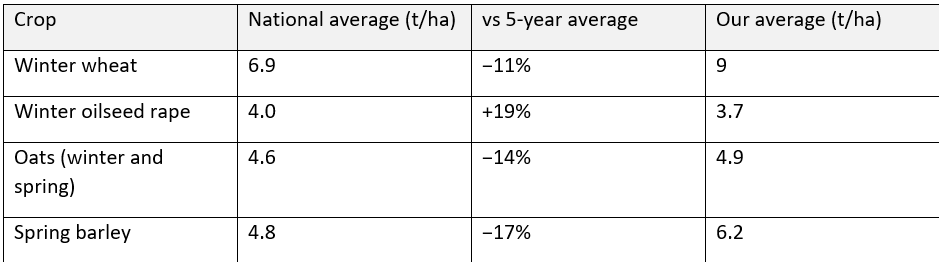
National figures are from AHDB's final Harvest Progress report, 25th September 2026.
What the weather did to the crop
The damage was done in the final weeks of the season. Crops were short of water and under heat stress just as they should have been filling grain. Instead of ripening slowly and packing in starch, plants shut down early and the grain dried out rather than matured. Harvest started around a month early in many areas.
• Drought stress cut tillers and biomass in spring, so there were fewer, smaller ears to fill.
• Heat stress at flowering and grain fill reduced grain numbers and shortened the filling period.
• No late growth. With no rain to finish crops, the last weeks of grain fill, usually worth a tonne or more, simply didn't happen.
• Lighter grain. Growers on light land reported crops that ripened earlier, so "the weight isn't there", while heavier soils held on better.
Quality was highly variable. Wheat was often good, with high proteins and solid specific weights on the better land. Barley was thinner and more brittle, and a lot of malting barley was rejected for high nitrogen or low retention and went for feed.
Why winter crops beat spring crops
The gap between our winter and spring crops is the same one seen nationally, and it comes down to roots and timing.
1. A head start underground. Winter crops were drilled in autumn and rooted deep over a wet winter, so they could reach moisture held lower in the soil. Spring crops went into drying seedbeds in a dry April and never got their roots down.
2. Bigger plants going into the dry. By late May, AHDB rated 62–78% of winter crops good or excellent, against 35–57% of spring crops. Winter crops had more tillers and leaf to carry them through.
3. Grain fill before the worst of it. Winter crops did most of their grain fill in June. Spring crops were filling in July, England's driest on record, with the heat building.
4. Earliest crop, best result. Oilseed rape flowers and fills first of all, which is why it was the one crop nationally to finish above average.
On our thin chalk downland soils, which hold little water, those differences were magnified.
What we take into 2027
The clearest lesson from 2026 is that our winter crops paid their way and the spring crops did not.
• Winter cropping earned its place. Winter wheat and oil seed rape all finished close to target while spring barley, oats and linseed fell well short.
• Crusoe was the most reliable wheat. It averaged 8.6 t/ha over 10 fields with no field below 7.6 t/ha.
• Soil conditions in fields with poorer performing crops need to be investigated. Yields on some farms were roughly half those achieved on others across all crops, so understanding the reasons for these differences is a priority for next season.
Thanks as ever to the whole team, and to the landowners we farm alongside, for another harvest safely gathered in.
References
Omnia Digital Farming (Hutchinsons). Harvest 2026 field cropping and yield records for all J Atkinson holdings. Accessed 8 October 2026.
AHDB. GB harvest progress: final report for harvest 2026. Agriculture and Horticulture Development Board, 25 September 2026.
AHDB. Analyst insight: dry start to May hits UK crop conditions. 29 May 2026.
Allison, R. Spring barley yields hit hardest by 2026 drought, says report. Farmers Weekly, 25 September 2026.
Green, J. and Wills, R. Harvest 2026: light land crops struggle and some OSR wins. Farmers Weekly, 14 July 2026.
White, A. Drought estimated to have cost UK cereal growers £452m in lost yield. Farmers Guide, 6 October 2026. Analysis by the Energy and Climate Intelligence Unit (ECIU).
Agriland. Summer 2026 ‘provisionally hottest on record’ for UK. 2 September 2026, reporting Met Office data.